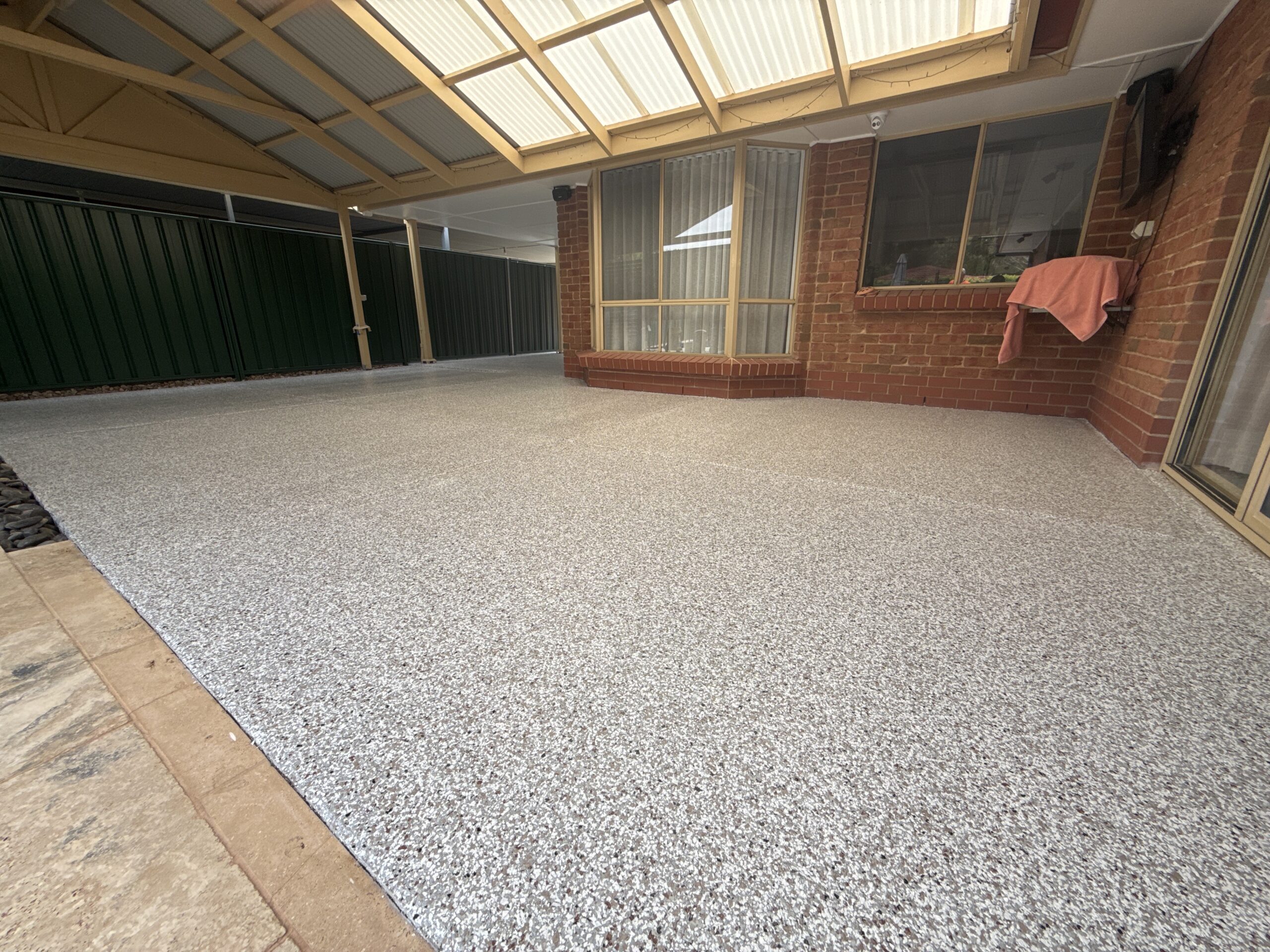
Yes, epoxy flooring can be an environmentally friendly option when it is chosen and installed responsibly. Its long lifespan, low maintenance needs, and ability to reduce material waste make it a practical surface for many Australian homes and businesses. While epoxy is a synthetic resin and not a natural product, its durability and efficiency can offset its environmental footprint over time, especially when compared with flooring that needs frequent replacement.
What makes epoxy flooring a sustainable choice?
Sustainability is not only about what a product is made from. It is also about how long it lasts, how often it needs to be replaced, and how it performs in real conditions. Epoxy flooring scores well in several of these areas.
Epoxy floors are designed to last for many years without cracking, lifting, or wearing through under normal use. In garages, outdoor entertaining areas, workshops, and commercial spaces, this durability means fewer replacements and less material sent to landfill. Many traditional floor finishes need to be removed and replaced more often, which increases waste and resource use.
Another environmental advantage is that epoxy flooring can often be installed over existing concrete. This reduces the need for demolition, cutting, and disposal of old surfaces. Less demolition means less dust, fewer transport emissions, and lower overall site waste.
Low maintenance means lower impact
One of the most practical sustainability benefits of epoxy flooring is its low maintenance profile. Once installed, it does not require harsh chemical cleaners, frequent resealing, or specialist treatments to stay in good condition. Simple cleaning with mild products is usually enough.
This reduced reliance on strong cleaning agents lowers the amount of chemicals entering wastewater systems. Over time, this contributes to a smaller environmental impact compared with surfaces that demand regular intensive cleaning or refinishing.
If you are considering a long lasting floor for your garage or entertaining area, Surface Rescue can help you assess whether epoxy is a suitable and responsible option for your space.
Longevity and lifecycle value
From an environmental perspective, the lifecycle of a product matters. A floor that lasts fifteen to twenty years can be more sustainable than a natural option that needs replacing every five years.
Epoxy flooring resists moisture penetration, oil stains, tyre marks, and general wear. In Australian conditions where garages and outdoor areas are exposed to temperature changes and heavy use, this resilience supports a longer service life.
By reducing the frequency of repairs and replacements, epoxy flooring helps lower the total materials used across the life of a building. This is an important consideration for homeowners and business owners looking to make sensible long-term choices.
Older epoxy products had a reputation for strong odours during installation. Modern systems used by experienced installers are far more advanced and are applied with strict ventilation and curing processes.
Once cured, epoxy floors are inert and do not release ongoing fumes into the space. This makes them suitable for areas such as garages and commercial interiors where air quality still matters.
Professional installation is key here. Correct mixing, application, and curing reduce waste and ensure the floor performs as intended without premature failure.
Where epoxy flooring works best
It is important to be clear about where epoxy flooring is appropriate. Epoxy is not suitable for wet areas such as bathrooms, laundries, or internal shower spaces. Constant standing water can compromise performance over time.
Epoxy flooring is best suited for garages, outdoor entertaining areas, workshops, warehouses, and similar surfaces. In these environments, it provides a hard-wearing finish that supports sustainability through durability.
Surface Rescue focuses on full flake epoxy floors for residential projects and single colour or full flake epoxy for commercial spaces. Metallic, polished, or burnished concrete finishes are not offered, allowing full attention to be placed on systems that perform consistently in Australian conditions.
Flake epoxy and sustainability
Full flake epoxy systems add both strength and slip resistance. The flakes create texture, which improves safety and reduces the need for additional treatments or coatings.
From a sustainability point of view, this matters because fewer add-on products are required over time. A well-installed flake epoxy floor maintains its appearance and performance without frequent intervention.
For commercial environments, single colour epoxy offers a clean, durable surface that supports heavy foot traffic and equipment without rapid degradation.
If you are weighing up flooring options and want something that balances performance with environmental responsibility, a conversation with Surface Rescue can provide clarity without pressure.
Responsible installation matters
No flooring system is sustainable if it is poorly installed. Failed floors lead to early removal and replacement, which increases waste and emissions.
Experienced installers prepare the concrete properly, apply the correct thickness, and manage curing conditions. This attention to detail helps the floor reach its expected lifespan, which is essential for sust
Choosing a specialist who understands local conditions and usage requirements is part of making an environmentally responsible decision.
Is epoxy flooring right for your project?
Epoxy flooring is not a universal solution, but when used in the right settings, it offers a strong balance between durability, practicality, and environmental sense.
For Australian homes, garages and outdoor entertaining areas benefit most. For businesses, workshops, showrooms, and industrial spaces, gain value from epoxy’s long service life and low upkeep.
If sustainability is important to you, consider the full picture rather than just the material itself. How long will it last? How often will it need replacing? What maintenance will it require?
For clear advice and professional installation, contact Surface Rescue today to discuss epoxy flooring options that suit your space and usage needs.
FAQs
1. Is epoxy flooring environmentally friendly compared to tiles or vinyl?
Epoxy flooring can be more environmentally responsible over time because it lasts longer and needs less frequent replacement. This reduces waste and material use across its lifespan.
2. Does epoxy flooring contain harmful chemicals once installed?
Once cured, epoxy flooring is inert and does not release ongoing fumes. Proper installation and curing are essential to achieve this result.
3. Can epoxy flooring be installed over existing concrete?
Yes, in many cases, epoxy can be applied directly over prepared concrete. This reduces demolition waste and supports sustainability goals.
4. Is epoxy flooring suitable for wet areas?
No, epoxy flooring is not recommended for wet areas such as bathrooms or laundries. It performs best in garages, outdoor entertaining areas, and similar spaces.
5. What types of epoxy flooring does Surface Rescue offer?
Surface Rescue provides full flake epoxy floors for residential projects and single colour or full flake epoxy floors for commercial spaces. Metallic, polished, or burnished concrete finishes are not offered.
6. How long does an epoxy floor typically last?
With correct installation and normal use, epoxy floors can last many years, often well over a decade, which supports a lower environmental impact over time.