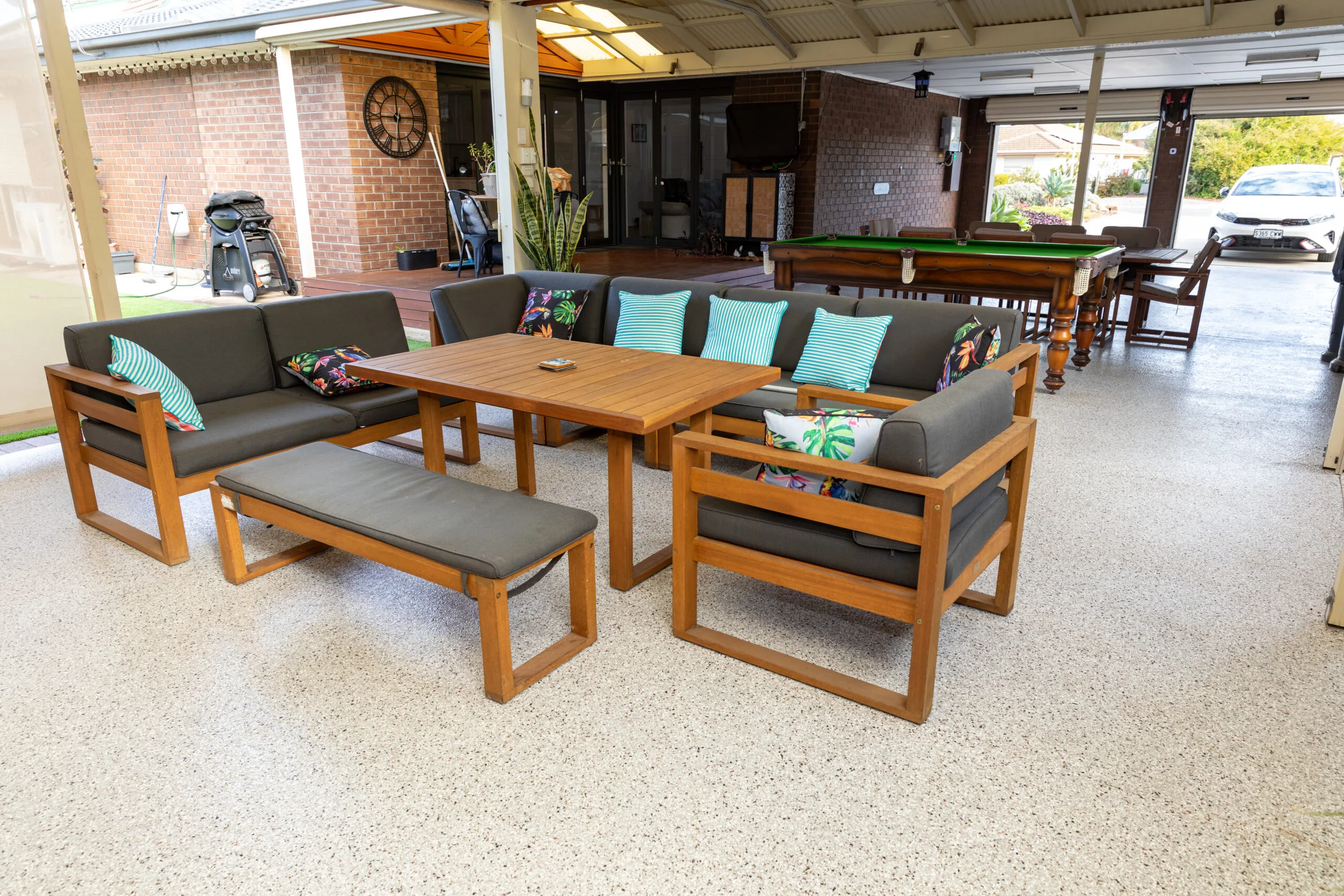
Epoxy flooring is known for its strength, long lifespan and clean finish, but it is not immune to issues. The good news is that most epoxy floor problems can be prevented or fixed with the right preparation, products and installation methods. Many epoxy flooring problems occur because of poor surface prep, incorrect mixing, moisture, applying the coating in the wrong conditions or on the wrong type of surface. Below, you will find the ten most common problems with epoxy floors and how to correct or avoid them, especially for Australian homes and commercial spaces.
Before we begin, it is important to note that Surface Rescue does not offer metallic, polished, or burnished concrete finishes. We specialise in full flake epoxy floors for residential projects, and single colour or full flake epoxy systems for commercial or industrial settings. Epoxy is not suitable for wet areas, but it performs exceptionally well in garages, patios, workshops, and outdoor entertaining spaces.
1. Peeling or Delamination
Problem: One of the most common epoxy flooring problems is peeling, which happens when the coating fails to bond to the concrete. This is usually caused by poor preparation, oils on the surface or applying the product over old paint.
Fix:
✓ Grind or mechanically prepare the slab to create a clean, porous surface.
✓ Completely remove contaminants like oil, glue and paint.
✓ Reapply the epoxy using the correct primer.
Using a diamond grinder and shotblasting the surface is the ultimate preparation method in ensuring the concrete has been thoroughly prepped.
2. Bubbles or Pinholes
Problem: Air trapped in the concrete slab can rise during curing, creating bubbles that ruin the finish.
Fix:
✓ Ensure the moisture content in the concrete is within acceptable limits.
✓ Apply a high-quality moisture-tolerant primer, such as a moisture vapor barrier.
✓ Install the coating during cooler parts of the day to reduce outgassing.
3. Moisture Problems
Problem: Excess moisture in the concrete is one of the biggest causes of problems with epoxy floors. It can lead to lifting, cloudy patches and blistering.
Fix:
✓ Perform a moisture test before installation.
✓ Use a moisture vapor barrier if the slab has borderline readings.
✓ Improve drainage or install vapour barriers for ongoing issues.
Problem: This happens when car tyres soften the epoxy due to heat and cause peeling. It is most common with low-grade DIY kits.
Fix:
✓ Use a high-solid, commercial-grade epoxy system like the ones installed by Surface Rescue.
✓ Ensure the slab is correctly profiled.
✓ Avoid parking on the floor during the curing period. Different epoxy systems have varying curing requirements, so it’s always worth confirming the specifics with your installer to ensure the best results for a long-lasting finish.
5. Uneven Finish or Patchiness
Problem: A patchy or streaky finish often results from incorrect roller technique or applying the coating too thin.
Fix:
✓ Apply the epoxy in consistent, even strokes.
✓ Use the correct notched squeegee and roller for the product.
✓ Add a full flake broadcast to help create a uniform appearance and hide minor imperfections.
6. Colour Variations
Problem: Temperature changes, mixing inaccuracies and applying epoxy in direct sun can cause colour inconsistencies.
Fix:
✓ Keep the product out of sunlight during installation.
✓ Mix each batch thoroughly and consistently.
✓ For large jobs, maintain batch numbers or apply full flake systems for colour stability.
Problem: If the epoxy has not cured properly, it often means the mixing ratio was incorrect, or the humidity was too high.
Fix:
✓ Ensure the resin and hardener are mixed at the correct ratio.
✓ Observe recommended curing temperatures.
✓ Remove the soft epoxy and reapply if necessary.
10. Poor Slip Resistance
Problem: Smooth epoxy can become slippery, especially in areas exposed to dust or moisture.
Fix:
✓ Add slip-resistant flakes or anti-slip additives.
✓ For residential jobs, Surface Rescue always recommends a full flake finish for improved texture and safety.
Thinking of Upgrading Your Garage or Outdoor Space?
If you want a long-lasting, low-maintenance surface, a full flake epoxy floor from Surface Rescue is one of the strongest options available for Australian conditions. Our team handles all prep, repairs and installation to remove the risk of epoxy floor problems common with DIY kits.
FAQs
1. What causes most epoxy floor failures?
Most failures come from poor surface prep, moisture issues and incorrect mixing. Choosing a professional installer greatly reduces these risks.
2. Can I fix peeling epoxy myself?
Spot repairs are possible, but significant peeling usually requires grinding back and recoating, which is best done by a professional.
3. How long do epoxy floors last?
A properly installed epoxy system can last 10 to 20 years, depending on usage and exposure.
4. Are epoxy floors suitable for wet areas?
No. Epoxy is not ideal for wet areas. It performs best in garages, patios and outdoor entertaining zones.
We offer full flake epoxy floors for residential projects and single colour or full flake epoxy for commercial spaces. We do not offer metallic or polished concrete finishes.
Ready to Fix Your Flooring Problems?
If you want a durable epoxy finish installed the first time correctly, Surface Rescue can help. Reach out today for expert advice and a tailored quote. Contact Surface Rescue now to book your epoxy flooring installation or repair.